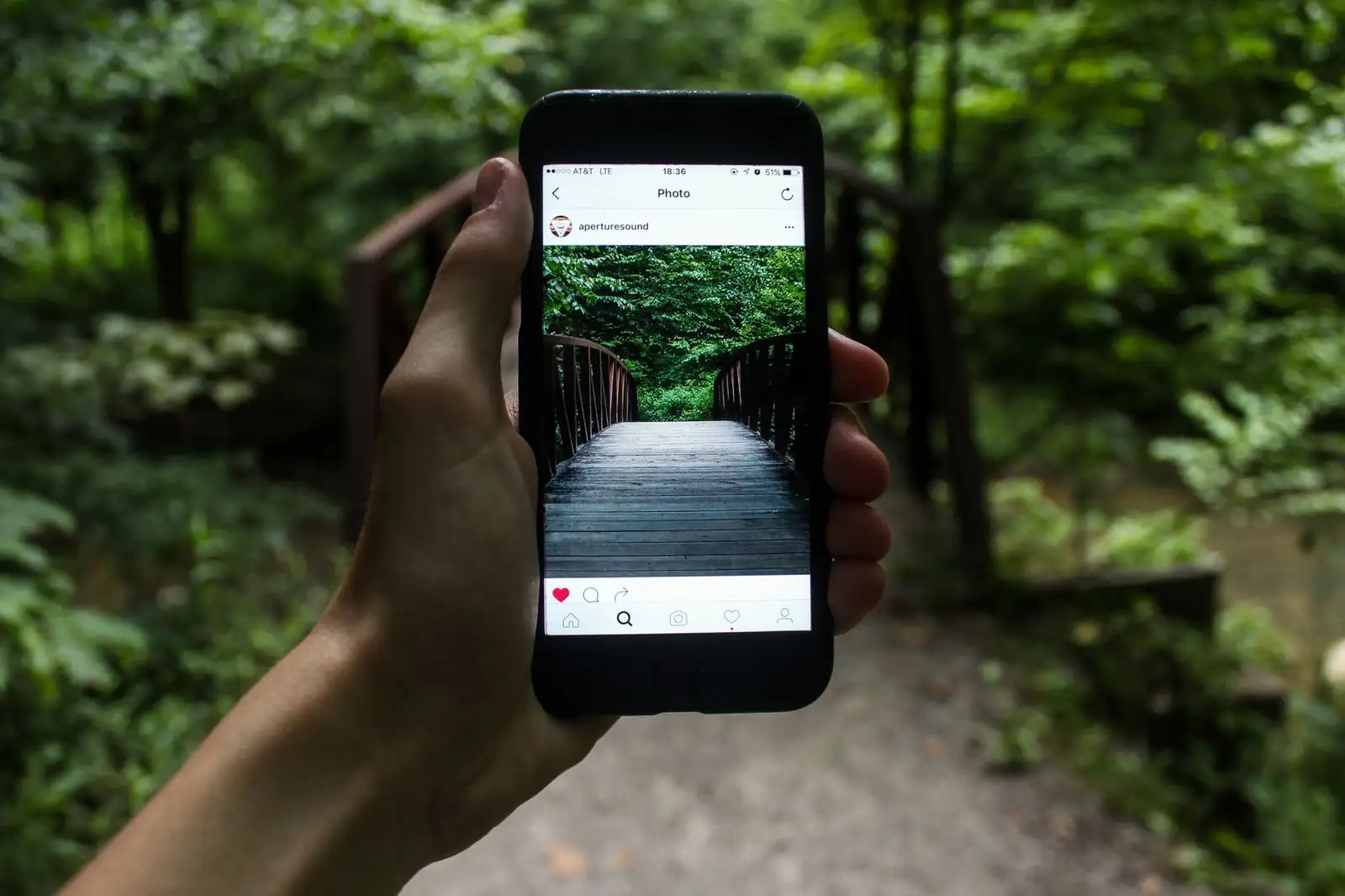

The algorithm doesn't just show you what to photograph; it's quietly deciding where you go, what you see, and whether your trip was real.
There's a specific kind of exhaustion that comes from standing in a place you've wanted to visit for years, phone raised, trying to get the angle right. Not the exhaustion of travel, the jet lag, the bad sleep, the sore feet. The low-grade dread of realizing you're not experiencing the place. You're producing it.
This is the Instagram Industrial Complex at work. Most of us recognize it, at least vaguely, even as we keep participating anyway.
The Thesis
Visual social media hasn't just changed how we document travel. It's restructured which destinations we choose, what we look for when we arrive, and, most insidiously, how we judge whether a trip succeeded. We've outsourced the evaluation of our own journeys to an audience.
That's the problem. Not the photography itself. The outsourcing.

How an Algorithm Becomes an Itinerary
Here's the mechanism, and it deserves careful attention.
Instagram's recommendation engine, TikTok's even more so, rewards visual novelty that fits established aesthetic categories. Turquoise water. Colorful doors. Aerial shots of terraced hillsides. The images that perform best are the ones that look like the images already performing best. There's a feedback loop built right into the architecture.
So travelers start with a search. The search returns high-performing images. High-performing images come from photographable spots. Those spots get visited, which produces more images, which the algorithm surfaces, which sends more travelers searching.
Within a few cycles, you have what researchers at the Center for Responsible Travel have called a concentration problem in tourism flows: visitor pressure piling up on a handful of visually spectacular sites while the surrounding region stays undiscovered and undersupported.
This isn't accidental. It's structural. The algorithm has no incentive to spread your attention across a region. It has every incentive to send you where the good photos already are.
And the good photos are already everywhere.
The Destination as Content Set
Walk through the Cinque Terre on any summer morning. Not the villages themselves, the trails connecting them. Watch what happens at every overlook. Phones go up. Bodies arrange themselves. Shots are taken, reviewed, retaken. People move on.
I'm not criticizing those people. I've done it. But notice what's happening: the views have been pre-framed. Someone else decided, years ago, which angles merited stopping for. Those angles got photographed, the photographs circulated, and now thousands of people a day are faithfully reproducing the same six compositions from the same six spots at the same time of day when the light is best.
The destination has become a content set with infrastructure attached.
The content set is often beautiful. The views from those trails are extraordinary. The problem isn't that people photograph them. The problem is what gets crowded out when photography becomes the primary mode of engagement.
When you're producing content, you're not wandering. You're not sitting still long enough to notice anything unexpected. You're not having conversations that don't fit the frame, or making the mistakes and wrong turns that occasionally crack open into something worth remembering. The entire texture of travel (the friction, the serendipity, the boredom that sometimes becomes interesting) gets optimized away.
The Validation Architecture
There's a psychological layer underneath the aesthetic one.
Social media platforms are, at their core, validation machines. The feedback loop of likes, comments, and shares is engineered to feel like social approval, because neurologically it activates similar circuits. This is documented, not speculation. The companies built it that way on purpose.
So what happens when you attach that architecture to travel?
You start measuring journeys by their social performance. A trip that generated strong engagement feels successful. A trip that didn't, no matter how interesting or personally meaningful it was, carries a faint residue of failure. You were there, but you couldn't make it land.
That's a profound inversion. The experience is no longer the point. It becomes raw material for content, and the content becomes the point.
I've talked to travelers who describe beautiful, unusual trips with apologetic embarrassment because "the photos didn't turn out." They spent three weeks doing interesting work in a place most people have never heard of, and they come home feeling like they failed.
That's the machine working as intended.
What Gets Left Out of the Frame
The algorithm's aesthetic preferences aren't neutral. They favor certain kinds of places, certain kinds of beauty.
Photogenic poverty is a known problem in travel photography, the colorful decay of a struggling neighborhood, aestheticized and exported as atmosphere. But there's a subtler distortion that doesn't get discussed nearly enough.
The algorithm undervalues the unspectacular.
A family-run restaurant in a mid-sized Italian city that's been serving the same regional dishes for forty years doesn't photograph particularly well. A conversation with an elderly farmer about how the olive harvest has changed in his lifetime produces no content whatsoever. An afternoon in a town square watching nothing in particular happen is, from a content standpoint, a waste of time.
These are also, frequently, the moments people describe years later as the ones that mattered.
Not always. I don't want to romanticize the mundane: plenty of unremarkable moments are unremarkable. But the algorithm's filtering removes an entire category of experience from consideration before you've packed your bag. You're working from a pre-edited version of what a place can offer.
The Homogenization Effect
The world's most-photographed destinations increasingly look identical on social media, regardless of where they actually are.
The same warm-toned presets. The same compositional moves. The same golden hour timing. Scroll through images tagged in Santorini, Dubrovnik, and Chefchaouen, and you'll notice they've developed a shared visual language that says less about those specific places than it does about what performs well on the platform.
When the primary way millions of people encounter the world is through images filtered through the same algorithmic preferences, those preferences start shaping what people think the world looks like: and by extension, what they go looking for when they get there.
The algorithm doesn't reflect existing preferences. It manufactures new ones, then shows you evidence that everyone already has them.
The Crowd That Follows the Image
There's an environmental consequence to all this that rarely comes up in conversations about social media and travel.
When an image goes viral, people go to the location. Sometimes in numbers the place simply can't absorb. This has played out repeatedly, the lavender fields in Provence that were essentially trampled into tourist infrastructure after a few seasons of Instagram popularity, the small Scottish highlands spots that suddenly needed parking management after appearing in a viral post, the Icelandic waterfalls that went from local secret to international attraction within a year or two.
The image precedes the crowd. The crowd precedes the degradation. The degradation gets documented and posted. The next wave of visitors arrives.
This cycle has no structural mechanism for interruption, because the industry profits from it. More visitors means more economic activity, and the ecological and social costs get absorbed by the communities on the receiving end.
I'm not sure what a solution looks like at scale. But it probably doesn't start with another viral post.
The Influencer Economy's Honest Proposition
The influencer economy is at least transparent about what the broader travel industry has long obscured.
When a travel influencer posts from a resort in the Maldives, there's usually (not always, but usually) a disclosure. Gifted. Partnership. AD. The commercial relationship is visible, even if the influence is still real.
Travel's editorial content (the magazine spreads, the "independent" reviews, the "best of" lists) has operated on commercial relationships for decades without comparable transparency. The influencer made the exchange more explicit.
This doesn't make it better. It makes it honest in a way that's almost uncomfortable. Everyone in the chain (the influencer, the resort, the platform, the algorithm, and eventually the traveler) is participating in a transaction that produces content, drives bookings, and generates profit. The journey is incidental to the economic function.
Some operators take a genuinely different approach. Culture Discovery Vacations, for instance, has built its model around what they call "anti-luxury" principles: deliberately removing the amenities and performance markers that make travel Instagrammable, in favor of conditions where something less produceable might happen. Their approach is worth understanding as a contrast to the content-first model, even if you're not booking a trip.
The Attention Problem
Here's the thing I keep coming back to.
Attention is the actual resource at stake. Not money, not time, though those matter too. Attention is what the algorithm harvests, and attention is what genuine engagement with a place requires.
The two compete directly.
You can't produce content and be fully present to what's happening around you at the same time. These aren't compatible states. When you're framing a shot, you're thinking about composition, light, and how it'll read on a screen. When you're present to a place, you're noticing things that don't fit frames, the smell of something, the specific quality of afternoon light that won't translate to a photograph, the way a conversation is heading somewhere unexpected.
Most of us switch between these modes constantly, and that's probably fine. But the algorithm is designed to pull you toward production mode, because production is what it can use.
Your attention, though? That's yours. The algorithm can influence where you point it, but it can't consume it directly. That's where any resistance lives: not in refusing to photograph things, but in refusing to let the desire for content drive what you notice.
What Resisting Actually Looks Like
Not an abstraction. Some specifics.
It might mean choosing a destination because it interests you rather than because it photographs well: somewhere that won't produce a single image worth posting but has depth to understand.
It might mean leaving the phone in the bag for a morning. Not as a spiritual practice or a digital detox (both of which are more content categories), but as a simple experiment in what you notice when you're not producing anything.
It might mean accepting that some moments won't translate to anyone who wasn't there. That they don't need to. That the value of a trip isn't measured by how well it compresses into shareable form.
It might mean sitting with the mild social discomfort of coming home with nothing to show for it. Nothing that performs, anyway. A head full of things that are hard to explain. A few conversations you can't quite summarize. The feeling of a place at a particular time that won't fit into an image.
This is genuinely hard. The validation architecture is strong, and the social pressure to produce evidence of your travels is real. I don't think there's a clean solution, and I'm suspicious of anyone who claims otherwise.
A More Honest Accounting
The Instagram Industrial Complex isn't going away. The algorithm will keep optimizing. The content economy will keep producing. The crowds will keep flowing toward the images.
But there's a difference between participating in a system and being captured by it. Most of us have to participate; we live in the world, we use the platforms, we're subject to the same recommendation engines as everyone else. The question is whether the algorithm is setting your itinerary or you are.
And underneath that: whether you know what you're looking for when you travel.
Not the shot. Not the validation. Not proof that you were somewhere worth being.
What are you looking for?
That's worth figuring out before you buy the ticket. Because if you don't know, the algorithm will answer for you. It's very good at that.
The best trips I've taken have produced almost no usable content. I'm not sure that's a coincidence.
Comments (0)
No comments yet. Be the first!