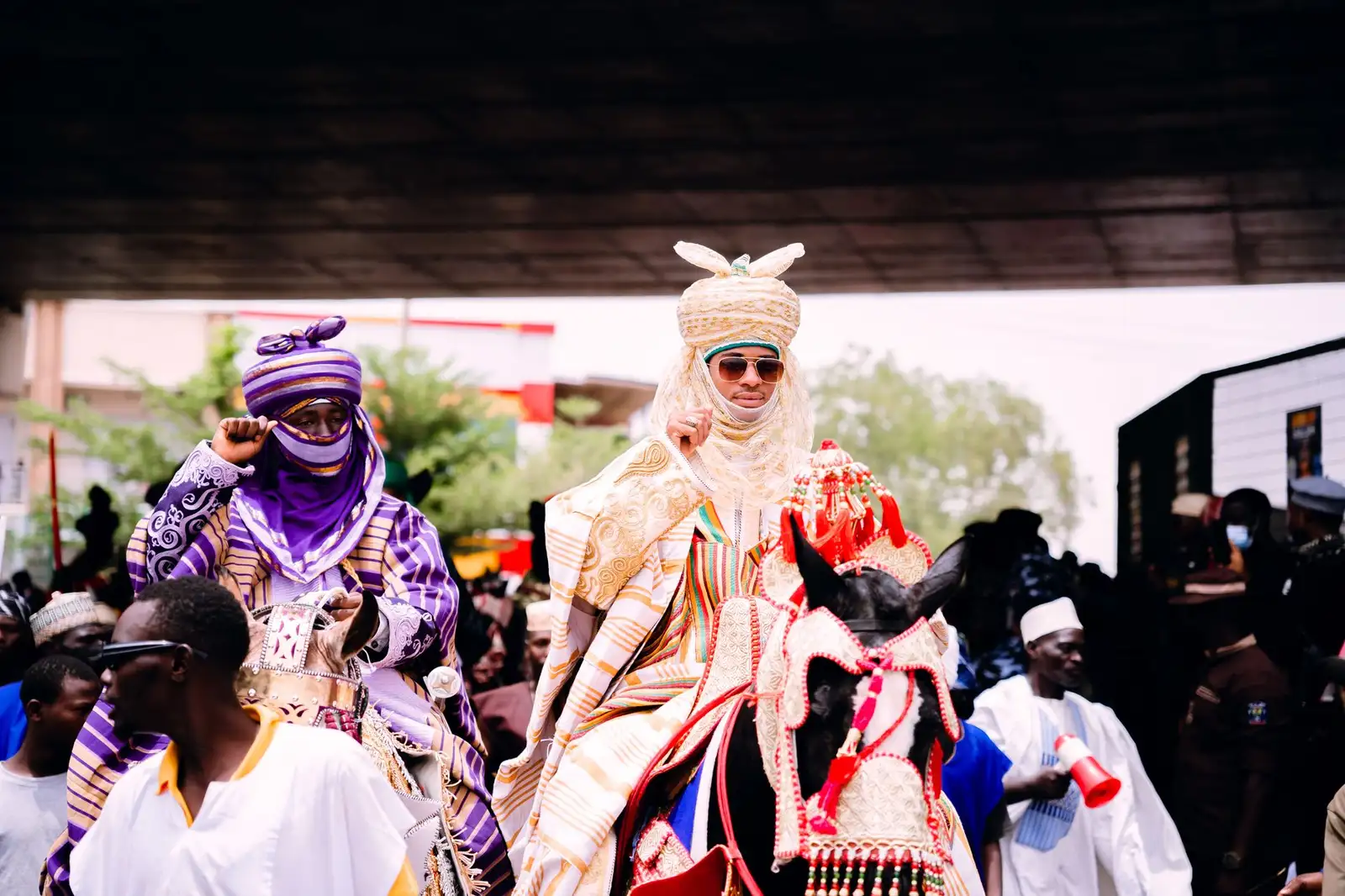

Picture a procession moving through a medieval Italian hill town at dusk. Drums. Torchlight. The smell of woodsmoke and something roasting nearby. And somewhere in the crowd (roped off, wristbanded, photographed from above by a drone hired by a tour company) a group of guests who paid four thousand euros to be there.
They're watching. Not participating. Watching.
That's the thing nobody in the luxury travel marketing world wants to say out loud: being an expensive spectator is still being a spectator.
The Commodification Playbook
Here's how it usually goes. A regional festival (maybe a harvest celebration, maybe a medieval pageant, maybe a religious procession that's been running for four hundred years) gets discovered by travel media. A glossy magazine runs a spread. A tour operator adds it to an itinerary. Then another. Prices for local accommodation double, then triple. A "VIP viewing platform" appears. Ticketing structures emerge where none existed before. Vendors who used to sell to their neighbors start pricing for foreign visitors.
Within a decade, the festival that was once a community event has a marketing budget, a hashtag, and a partnership with a credit card company.
This isn't speculation. Research from the Center for Responsible Travel has tracked how tourism monetization affects local cultural events across multiple regions, consistently finding that commercial pressure reshapes the event itself (its timing, its format, even its content) to suit tourist expectations rather than community needs.
The locals often still show up. But they show up differently. They start performing their own culture for an audience, which is a subtle, corrosive shift that takes years to fully register.
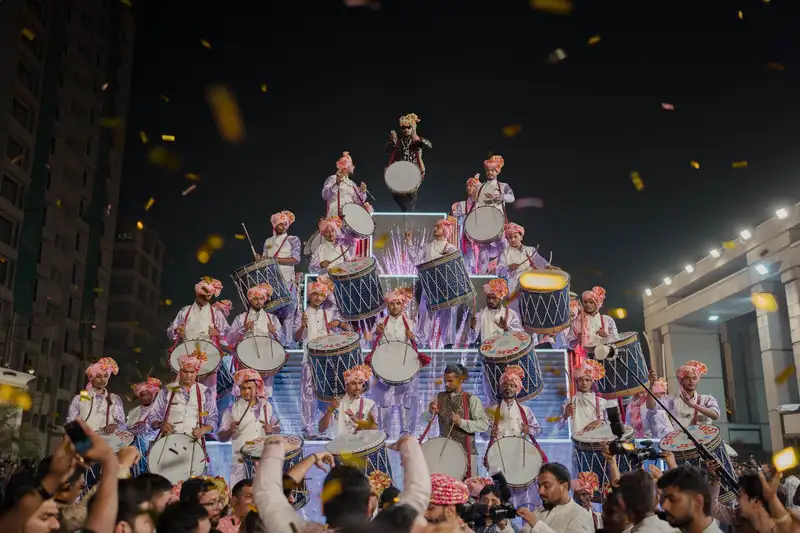
What "VIP Access" Actually Buys
Luxury operators are skilled at selling proximity. You'll hear phrases like "exclusive access," "behind-the-scenes," "private ceremonies." The language implies that you're getting something unmediated. But proximity to a performance isn't the same as participation in a tradition.
When a company sells you "exclusive viewing" of a festival procession, what they're usually doing is negotiating a physical position: closer to the front, elevated, away from the crowds. You're still watching. The exclusivity is spatial, not cultural. You're not inside the thing; you're closer to the glass.
And the glass matters more than the marketing admits.
I've seen this up close. A luxury operator offering "immersive" access to a traditional celebration in Umbria (I won't name the town, but you'd recognize it) had arranged a private dinner beforehand at a restored palazzo, a guided "orientation" to the history of the festival, and then a roped-off viewing area with catered drinks. The guests were physically present. Culturally, they were elsewhere. They'd paid for the aesthetic without the substance, and most of them didn't seem to notice the difference, which is perhaps the most troubling part.
Rituals Weren't Designed for Your Instagram Feed
Here's what gets lost when money enters the equation: friction.
Festivals are uncomfortable. They're loud in ways that aren't photogenic. They run late, start late, change without warning. The food might not suit your palate. The crowds don't part for you. Children cry. Elderly men argue about protocol. Priests get into disputes about the order of processions. It rains.
All of that messiness is the festival. It's not the backdrop to the festival, it's not the stuff that happens before the photogenic part; it IS the thing.
Luxury travel's entire business model depends on removing friction. Smoothed logistics, managed expectations, guaranteed comfort. Which means it's structurally incapable of delivering what makes a living tradition worth attending in the first place.
A Guardian piece on overtourism and cultural festivals made this point quietly but sharply: when events are optimized for outsider consumption, they start to resemble themselves rather than actually being themselves. The form persists, but the function hollows out.
That distinction deserves consideration.
The Palio Problem (And It's Not Just Siena)
Siena's Palio exists in a permanent state of tension between what it is and its tourist version. The race is real. The rivalries between contrade are real, sometimes dangerously so. But around that core has grown an enormous apparatus of tour packages, "VIP seats," hotel price gouging, and guided experiences that promise to decode what you're watching.
I know of one operator, one that actually handles this more honestly than most, that tells guests upfront: we'll walk the fair, but if you want to attend the Palio itself, we'll come with you and we'll probably leave an hour or so in, because three hours watching the same preparations isn't what you think it will be. That kind of candor is rare. Most operators sell the fantasy of the full experience without mentioning that the race itself lasts about ninety seconds and the surrounding hours are largely incomprehensible without years of context.
But Siena at least has a festival that's community-driven at its core. The contrade system is real, the passion is real, the internal politics are real. The tourists are almost incidental to what the locals are doing.
The problem is the operators who take that model and apply it to smaller, less resilient celebrations (harvest festivals in Puglia, Carnival traditions in smaller Venetian towns, religious feast days in rural Portugal) where the community doesn't have the same structural resistance to tourist pressure. Where the money actually changes the event, not the viewing conditions around it.
Pricing Out the People Who Made It
This is the part that should bother everyone more than it does.
When a regional festival becomes a luxury tourism draw, local accommodation prices spike for the dates surrounding it. Local restaurants shift menus and raise prices. Vendors recalibrate entirely for tourist spending. Meanwhile, the people who grew up attending this festival (who might have modest incomes, who might live an hour away in a smaller village) start finding it harder to participate.
They can't afford the hotels. The restaurants their grandparents went to after the procession are now priced at tourist rates. The public spaces that used to be free start developing "premium zones."
When a festival gets expensive enough to keep locals out, it's no longer a local festival; it's a theme park with better costumes.
This isn't abstract. It's happening across southern Europe. Dubrovnik's cruise ship caps came partly in response to locals being functionally displaced from their own city during peak periods. The same dynamic plays out at a smaller scale with festivals: the visitors arrive, the prices rise, the community retreats.
And then the luxury operators market the resulting spectacle as authentic.
What Immersion Actually Requires
It doesn't require money. That's the first thing.
It requires time, patience, and a willingness to be confused and uncomfortable. It requires showing up without a detailed itinerary and following what's happening rather than directing it. It requires eating what's available, not what's been arranged. It requires accepting that you might not understand everything, and that not understanding is itself a form of respect.
There are festivals across Italy, Spain, Portugal, and Croatia that remain community-driven precisely because they haven't been discovered yet, or because the communities involved have been careful about how they engage with outside interest. Small town patron saint days. Harvest celebrations in villages that don't appear in travel guides. Neighborhood festivals in mid-sized cities that tourists pass through without stopping.
These events aren't hidden because they're exclusive. They're hidden because nobody marketed them. Which means the community still controls what they are.
Getting to them requires what the luxury model can't package: the willingness to do the research yourself, to show up without guaranteed comfort, and to participate on the community's terms rather than your own.
The Slow Festival Approach
Some travelers (I'd call them festival pragmatists, though they'd probably reject the label) have started approaching this differently. They pick a region, not an event. They spend two or three weeks in a single area during a period when local celebrations are likely, based on agricultural calendars, religious feast days, or regional traditions. And they wait.
Not passively. They go to the market every day. They eat where the locals eat (and not at the places with menus in four languages). They learn ten words of the local language and use them badly. They make themselves a recognizable presence.
When the festival happens, they're not observers who showed up for it. They're people who were already there. That's a completely different experience, and it costs less than a luxury operator's deposit.
I've watched this dynamic play out firsthand on small-group tours that prioritize exactly this kind of integration: where the goal isn't to witness a tradition but to be present within a community long enough that the tradition includes you naturally. The contrast with the roped-off viewing platform model is almost impossible to overstate.
A Different Model
Some operators have pushed back against the spectacle approach for years. Culture Discovery Vacations, for instance, has built its entire model around the idea that guests should adapt to the local culture rather than requiring the local culture to adapt to them: including things like eating dinner after 8pm because that's when Italians eat, or skipping the cappuccino with meals because that's not how it's done. Their approach treats cultural participation as a two-way negotiation, not a consumption event.
That's a different starting assumption than most of the industry operates from, and it produces a different kind of traveler.
The Honest Question
Why do people pay enormous sums to attend festivals through luxury operators?
Partly comfort, obviously. Partly logistics, the language barrier is genuine, the research is time-consuming, and not everyone has the flexibility for open-ended slow travel. These are legitimate considerations.
But I think partly it's the confidence that money provides. If you've paid enough, surely you're getting the real thing. The cost functions as a quality guarantee, a signal that you've accessed something worth having rather than something second-rate.
The cruel irony is that in cultural tourism, the opposite is often true. The more you've paid for managed access, the further you probably are from anything real. The price of the ticket and the authenticity of the experience are frequently in inverse proportion.
That's not a comfortable thought if you've just booked a premium festival package. But it's worth sitting with before you book the next one.
What to Actually Do
This isn't a list of tips. (I'm skeptical of those too.) But there are a few principles worth naming.
Go to the places that haven't been packaged yet. Not because they're undiscovered in some romantic sense, but because the absence of packaging usually means the community still controls what it is. Show up as a guest, not a consumer. Accept that you might miss the "main event" and find in the margins.
And when a luxury operator tells you they'll give you "exclusive access" to a traditional celebration, ask one question: exclusive access for whom? If the honest answer is "for people who can afford our price point," then what you're buying is separation from the thing itself, not closeness to it.
Festivals don't have VIP sections. The VIP section is the invention that tells you everything you need to know about what's actually being sold.
The best thing a festival can do for a traveler is make them feel, for a few hours, that they arrived somewhere real. That feeling is not for sale. Which is exactly why so many operators are trying to sell it.


Comments (0)
No comments yet. Be the first!